
Reminiscence Therapy for Dementia: Preserving Functional Communication and Quality of Life
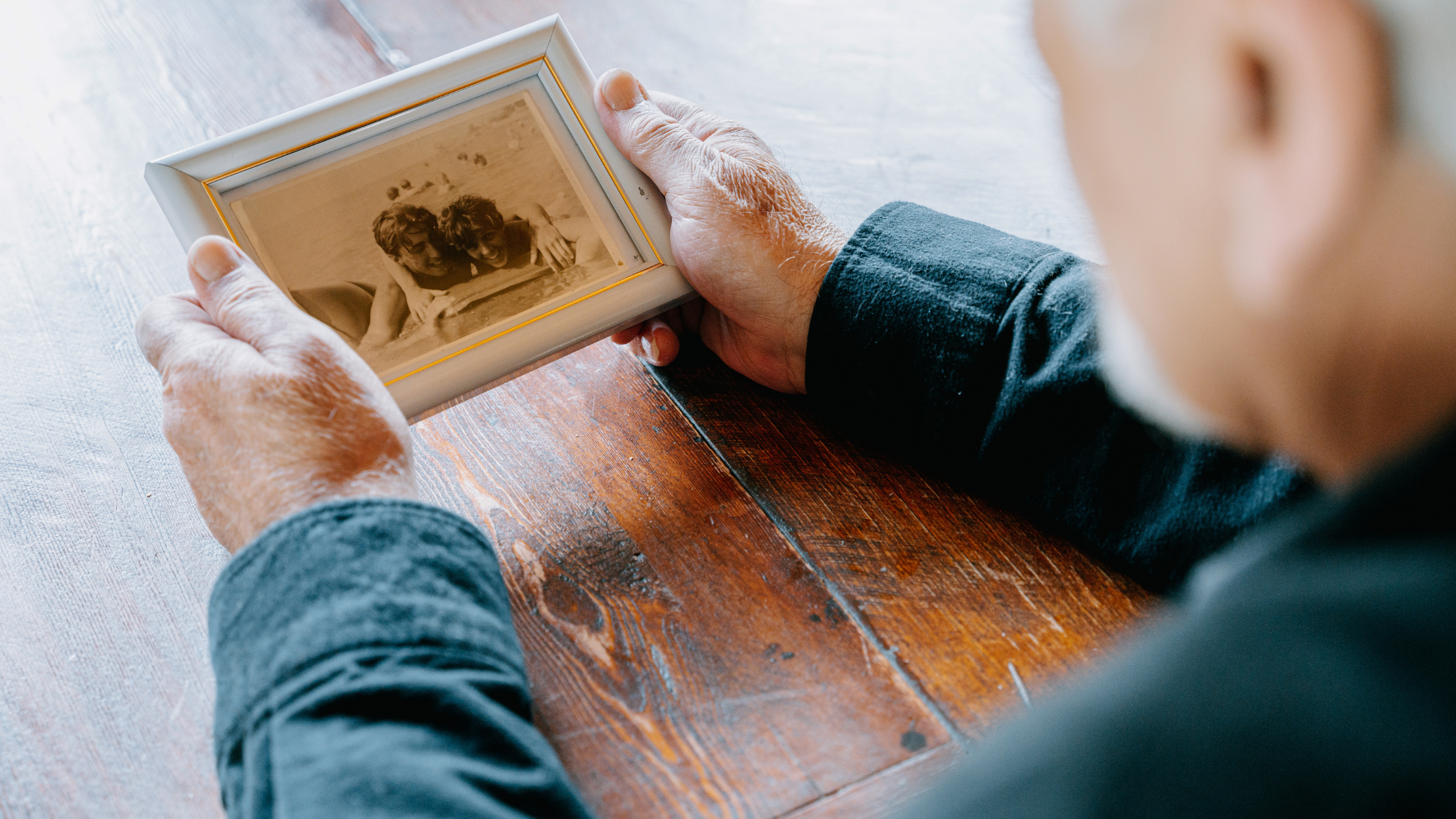
Based on: Reminiscence Therapy & Language Outcomes
When we talk about reminiscence therapy for dementia, we often focus on mood or memory. But language—the ability to express needs, share stories, and participate in conversation—is just as critical.
In dementia care, communication is not secondary. It is central to autonomy, dignity, and quality of life.
And emerging research suggests that reminiscence therapy may help preserve functional communication, even as cognitive decline progresses.
For speech-language pathologists (SLPs), caregivers, and long-term care leaders, that shift in focus matters.
Why Communication Matters in Dementia Care
Dementia is typically framed as a memory disorder. Yet communication breakdown often has the most immediate impact on daily life.
When functional communication declines:
Individuals struggle to express their needs or discomfort
Participation in care decreases
Behavioral symptoms may increase
Social isolation grows
Preserving functional communication in dementia supports:
Autonomy
Participation
Emotional well-being
Personhood
This is where speech therapy for dementia intersects with person-centered care.
What Is Reminiscence Therapy in Dementia?
Reminiscence therapy (RT) is a structured, nonpharmacological intervention that uses meaningful life memories to promote engagement and conversation.
It may include:
Photographs
Music
Familiar objects
Themed prompts (e.g., holidays, occupations, family traditions)
The goal is not perfect recall. The goal is interaction.
Unlike drill-based language exercises, reminiscence therapy centers on participation and narrative sharing. That makes it uniquely aligned with the principles of dementia communication therapy.
What Research Suggests About Language Outcomes
Recent research examining reminiscence therapy interventions for dementia found that many participants maintained or improved functional communication skills over time.
In progressive conditions, maintenance is clinically meaningful.
Rather than expecting dramatic improvement, we should ask:
Can we slow the decline?
Can we preserve participation?
When reminiscence therapy maintains functional language, it preserves:
Informative content in conversation
Engagement in group discussion
Social reciprocity
Confidence in interaction
In dementia care, preservation is progress.
Why Maintenance Is a Powerful Outcome
In neurodegenerative conditions, decline is expected.
So when functional communication remains stable:
Care interactions improve
Frustration decreases
Identity remains intact longer
Families experience a more meaningful connection
Too often, dementia interventions are evaluated solely through cognitive metrics. But the quality of life in dementia care depends heavily on access to communication.
Clinical Applications for SLPs
If you provide speech therapy for dementia, consider how reminiscence therapy can be integrated into your caseload.
It is:
Low cost
Adaptable for group or individual sessions
Compatible with interdisciplinary care
Sustainable in long-term care settings
You can:
Build themed conversation sessions
Use family-provided memory books
Train staff to use reminiscence prompts during care
Document maintenance of functional communication as a valid outcome
If your organization is exploring implementation-informed dementia programming, structured reminiscence therapy can be embedded into existing workflows with minimal disruption.
Systems-Level Impact
From a leadership perspective, reminiscence therapy aligns with:
Person-centered care mandates
Quality-of-life measures
Behavioral symptom reduction strategies
Nonpharmacological intervention priorities
Communication-focused interventions are not “extras.” They are foundational to the quality of dementia care.
What’s The Big Picture?
If you are an SLP or care provider:
Redefine success in dementia intervention.
Improvement is wonderful. But maintenance of communication is powerful.
This week, you can:
Introduce one structured reminiscence session
Add meaningful photos or objects to therapy
Educate staff on preserving communication as a care priority
Document maintenance as a functional win
When we preserve language, we preserve identity, which is the real outcome.
Reference
Reminiscence Therapy & Language Outcomes
Busch, C. M., Gilbertson, L., & Feggestad, K. (2025). Evaluation of reminiscence therapy on language outcomes among people with dementia. Perspectives of the ASHA Special Interest Groups, 10, 1263–1274.https://doi.org/10.1044/2025_PERSP-25-00022
